About
Daniel J. Ahearn,
LMFT
I'm a licensed marriage and family therapist and certified alcohol and drug counselor based in Los Angeles. I'm an IAT-certified clinician; I trained directly with Dr. Daniel P. Brown and Dr. David Elliott in Integrative Attachment Therapy beginning in 2018.
My clinical work centers on attachment repair: helping people change not just how they think about their relationships, but how their nervous systems experience safety and connection.
I serve as Director of Culture at Ascend Healthcare, a residential treatment program for adolescents in Los Angeles, where I run attachment repair groups and lead clinical training. I also maintain a private practice specializing in men's attachment work, father-teen repair, and families navigating the hardest years.
Free 15-Min Consult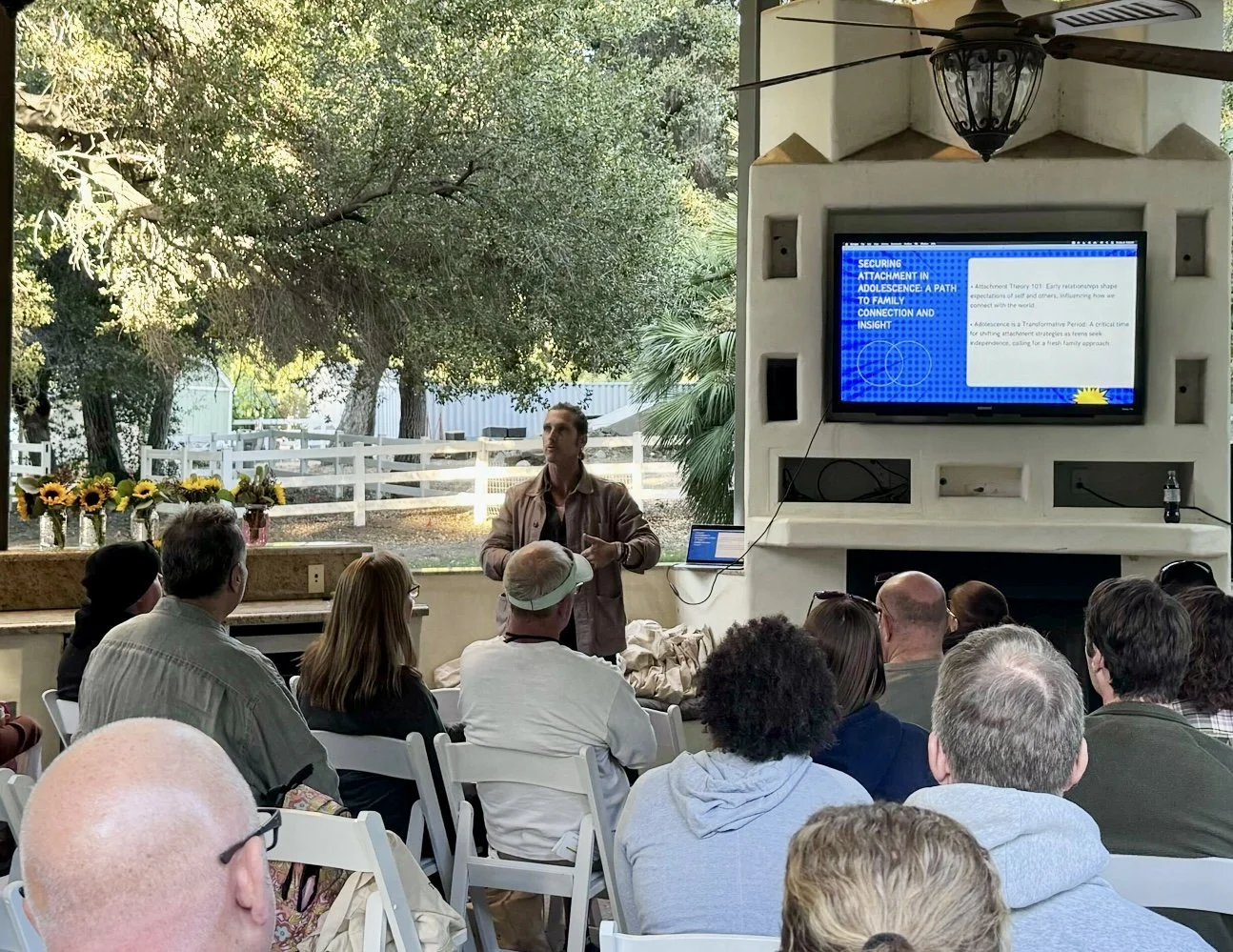
Clinical Philosophy
How I think about this work
Most people I work with aren't broken. They're adapted. What looks like emotional unavailability, withdrawal, chronic conflict, or anxious pursuit is almost always an attachment strategy that once made sense. A child who learned that needing things brought punishment learns not to need things. A child who learned that love was inconsistent learns to stay hypervigilant. Those strategies become personality. They become relationship patterns. They become the thing that wears people out.
The work isn't to override those patterns through willpower or insight. It's to provide the nervous system with something it never had: a felt experience of safety, attunement, and genuine care, and to do that repeatedly, over time, until a new foundation forms. That's what the Ideal Parent Figure Protocol does. That's what Integrative Attachment Therapy is built around.
I'm particularly drawn to father-teen attachment repair because it's underrepresented clinically and deeply consequential. The research is clear: paternal attachment shapes adolescent identity, risk tolerance, emotional regulation, and the templates teens carry into their own adult relationships. A father who does this work doesn't just change himself. He changes a family system.
Training & Credentials
Background
Integrative Attachment Therapy (IAT)
Trained directly with Dr. Daniel P. Brown and Dr. David Elliott in the Three Pillars / IAT framework since 2018. IAT-certified clinician.
Licensure & Certification
Licensed Marriage and Family Therapist (LMFT), licensed in California. Also holds CADC certification.
Clinical Hypnosis
Trained in clinical hypnosis, which informs the guided visualization and state-based work at the core of the Ideal Parent Figure Protocol.
Adolescent Residential Treatment
Over a decade working in adolescent residential treatment settings, including current work as Director of Culture at Ascend Healthcare in Los Angeles.
Bön Buddhist Contemplative Practice
A contemplative practice rooted in the Tibetan Bön tradition for over two decades, which informs an understanding of mind, attention, and the conditions for change.
Author
Author of The Way Back Home: Healing Attachment Wounds With Your Teen (2026), a clinical guide for families applying IAT principles to adolescent attachment repair.
The Method
Integrative Attachment Therapy
IAT is a structured, research-backed approach to attachment repair created by Dr. Daniel P. Brown (Harvard Medical School) and Dr. David Elliott, and now carried forward by IAT. It works by providing corrective emotional experiences, through guided visualization, that the nervous system can internalize as a new foundation for security.
The Ideal Parent Figure Protocol is its central tool: a systematic process of moving through developmental stages and building the internalized experience of being seen, soothed, safe, and supported.
Unlike models focused primarily on insight, IAT works at the level of implicit memory: changing not just how you understand your history, but how your body holds it.
The Three Pillars
Collaboration
Before the deeper work begins, therapist and client build a genuinely collaborative relationship: shared agenda, transparent rationale, the client’s voice shaping the work. The collaborative stance is itself the relational foundation.
Metacognition
Developing the capacity to notice your own attachment and relational patterns as patterns: thoughts as thoughts, feelings as feelings, expectations as expectations.
Ideal Parent Figure Imagery
Systematic guided visualization through developmental stages, rewiring early attachment wounds and building the internalized experience of secure attachment from the inside out.